Ages 7-10 · Screen-free · Growth mindset

What does your child do in the ten seconds after something goes wrong?

Murphy's Law for Kids turns the oldest truth going, that anything that can go wrong sometimes does, into nine real tools a child can actually use. Funny first, never preachy.

Nine named tools, not slogans Read-aloud or independent Home and classroom
Murphy's Law for Kids book cover: Noah, Ella and Biscuit the dog under the nine powers shield

Sound familiar?

Instead of one more book that says "be confident" or "never give up," this one answers the question kids really need answered: what do you do next?

Nine powers, one per chapter

Every chapter pairs a funny story about Noah, Ella and their friends (plus Biscuit, the very unhelpful dog) with one real, named tool. Not a slogan. A move they can make in the moment. By the last page, all nine clip together on the Bounce-Back Belt, martial-arts style, a stripe earned for every power.

What's Next? power shield

1. What's Next?

For the very first moment after something goes wrong.

The Magic Pause power shield

2. The Magic Pause

For when big feelings take over.

Oops-and-Adjust power shield

3. Oops-and-Adjust

For the second right after a mistake. A mistake is a clue, not a verdict.

The Tiny Brave Step power shield

4. The Tiny Brave Step

For tasks that feel too scary to start.

Plan B Power shield

5. Plan B Power

For when a plan falls apart. Bend instead of break.

The Power of Yet shield

6. The Power of Yet

Turn "I can't" into "I can't yet". Maybe the most quietly powerful word a child can learn.

The Reset Button power shield

7. The Reset Button

For rescuing a bad day before it swallows the whole day.

Fixing It power shield

8. Fixing It

For friendship fumbles and feeling left out.

What Did It Teach Me? power shield

9. What Did It Teach Me?

For turning a setback into something useful.

Grounded in ideas parents and teachers already trust

Here's the difference from the books that let you down before. Most resilience books stop at "you can do it." This one answers "here is exactly what to do," and every chapter delivers one specific, different power with its own story, so no two lessons feel the same.

Each tool rests on well-established growth-mindset and social-emotional learning ideas, from Carol Dweck's power of yet to the name-it-to-tame-it approach for big feelings. The moves stay simple enough for a kid to use mid-meltdown, while the thinking behind them is the kind you'd find in an SEL classroom. The free Parent & Teacher Guide lists the sources behind every chapter, so you can read the research for yourself.

Built to be used, not just read

😂

Funny first, never preachy

Stories kids actually want to keep reading. The lesson arrives through the laugh, not a lecture.

🛡

A shield to color in for every power

Kids earn each power and color in its shield, building toward the full Bounce-Back Belt.

🎓

Grounded in ideas grown-ups trust

Each tool rests on well-established growth-mindset and social-emotional learning ideas, kept simple enough for a kid to use in the moment.

Meet the crew

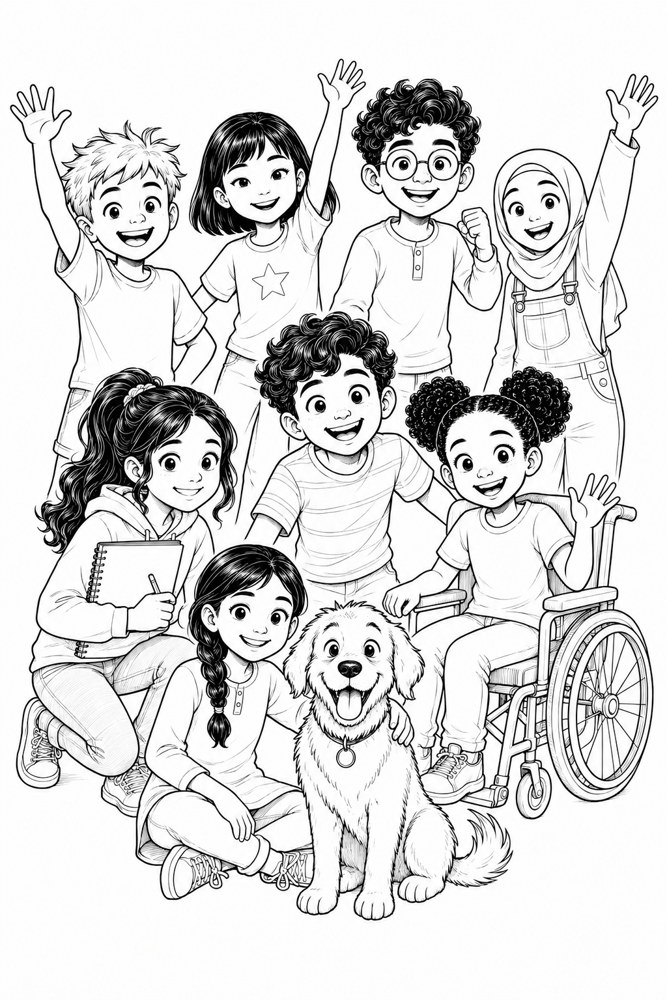
Noah (8, goofy, all-in) and Ella (9, quieter, thoughtful) carry the stories, with Biscuit the dog contributing nothing useful on every page. Around them: Diya, Mateo, Mei and Tariq, each bringing their own oops moments. If your child can find themselves somewhere in this lineup, that's the point.

Noah, Ella, Biscuit the dog and their friends: the Murphy's Law for Kids crew

The free companion kit

Every copy of the book links to two free downloads: the Parent & Teacher Guide (the whole toolkit on one page, a bedtime read-aloud playbook, and a low-prep classroom version) and the Bounce-Back Power Pack (the printable color-in shields kids collect to build their own Bounce-Back Belt, right through to the Full Belt certificate for the fridge).

Get the free kit